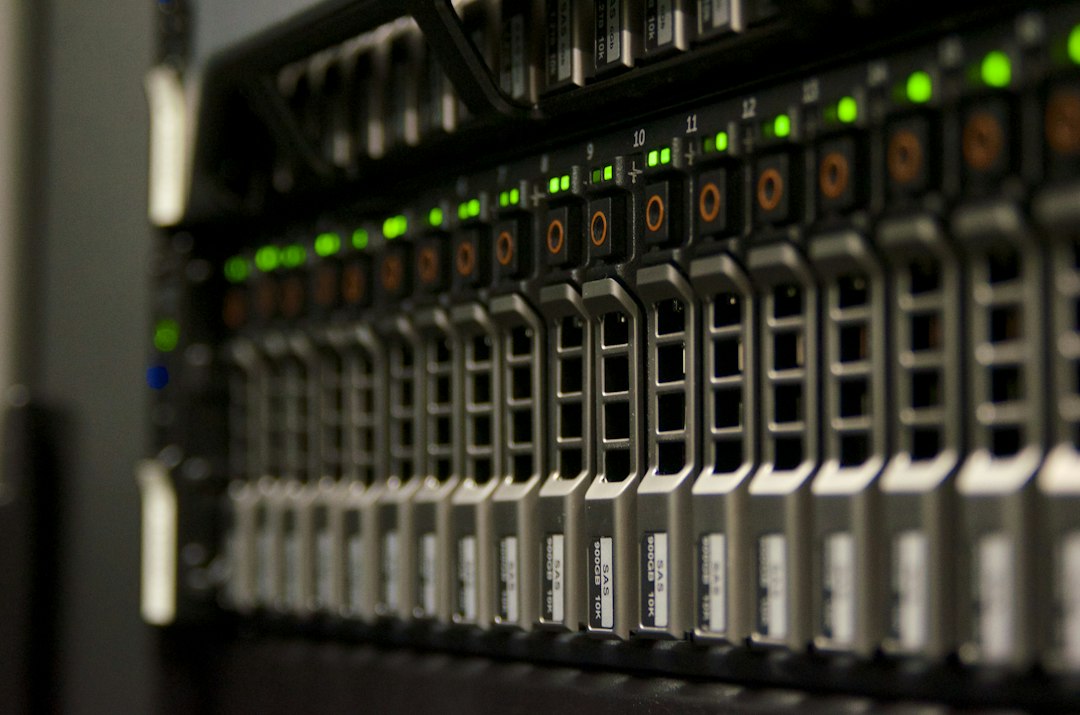
Photo by Domaintechnik on Unsplash
Why ARM Is Winning the Data Center
Why ARM Is Winning the Data Center
For most of computing history, running a server meant running x86. Intel and AMD built an architecture that compounded on itself for decades—software was compiled for it, operating systems were tuned for it, and the ecosystem reinforced the lock-in at every layer. The idea that a CPU architecture originally designed for low-power embedded devices would end up competing seriously in hyperscale data centers would have seemed implausible as recently as fifteen years ago. It no longer does.
Why x86 Held the Market So Long
The dominance wasn’t purely technical. Intel’s manufacturing advantage throughout the 2000s and early 2010s meant x86 chips were often the most performant option at any given node size, regardless of ISA. The software ecosystem compounded this: virtually every server workload was compiled and optimized for x86, JIT compilers targeted its instruction set, and kernel developers knew its performance quirks intimately.
ISA compatibility also created real inertia. Enterprises running fleets of virtual machines built on x86 assumptions weren’t in a hurry to recompile anything. The cost of switching wasn’t just hardware—it was validation, tooling, and organizational risk.
The Economics That Broke the Moat
Two things eroded x86’s position: the power wall and the cloud pricing model.
Modern data centers are constrained by power and cooling long before they run out of rack space. A CPU that delivers the same throughput at lower thermal design power is worth real money at hyperscale—not as a technical curiosity, but as a direct reduction in operating expense. ARM’s design philosophy, with its simpler out-of-order cores that prioritize efficiency, turns out to map well to a large category of server workloads.
Cloud providers also changed the incentive structure. When you operate millions of cores and pass CPU costs through to customers, building your own silicon becomes economically rational. AWS’s Graviton line was the clearest demonstration that the math worked. Amazon didn’t design Graviton because it wanted to be a chip company; it designed it because owning the silicon let it optimize the full stack and price compute more aggressively. The performance-per-dollar improvements across generations were significant enough that the ecosystem caught up to meet them.
What the Workloads Actually Reveal
Not every workload shifted equally. The applications that moved to ARM first were ones where throughput-per-watt matters more than single-threaded peak performance: web serving, containerized microservices, data pipeline processing, and increasingly, AI inference. These workloads scale horizontally, tolerate being spread across many modest cores, and benefit directly from lower per-core cost.
Legacy enterprise applications—especially anything with native compiled code, BIOS-level assumptions, or tight coupling to x86 behavior—moved more slowly. Windows Server ARM support has improved but the software compatibility story is still more complicated than Linux, where the toolchain support fell into place faster.
The compile-once-run-anywhere promise of managed runtimes (JVM, .NET, Node.js, Python with native extensions) substantially reduced the friction. Most of the web tier runs on runtimes that abstract the ISA, which meant workloads running on ARM often required nothing more than a recompile of native extensions and a few days of validation.
The Ecosystem Catch-Up
The deeper risk for ARM in servers was always the software ecosystem, not the hardware. That concern has largely been resolved for mainstream workloads. Major Linux distributions treat aarch64 as a first-class target. Language toolchains—Rust, Go, LLVM-based compilers—have solid ARM support. Containerized deployments abstract away a lot of the platform specificity, and multi-architecture container images have become routine in mature CI/CD pipelines.
The remaining gaps are in the long tail: niche kernel modules, proprietary software that ships binary-only x86 builds, and performance-critical code with hand-written x86 assembly intrinsics. These are real blockers in specific contexts, but they’re shrinking.
Where This Goes
The more interesting question now isn’t whether ARM can run server workloads—it clearly can—but how far the architectural diversity goes. RISC-V is an early but credible third option, especially for custom silicon. Domain-specific accelerators (for networking, storage offload, AI inference) are being designed in ARM-adjacent ways that blur the line between general compute and specialized silicon.
For the cloud-native majority, the practical takeaway is straightforward: validate your workloads on ARM instances, measure the performance-per-dollar difference for your specific access patterns, and treat architecture-specific assumptions in your build and deployment pipeline as technical debt worth addressing. The monoculture is ending; that’s a complexity cost, but also a real opportunity to reduce infrastructure spend.