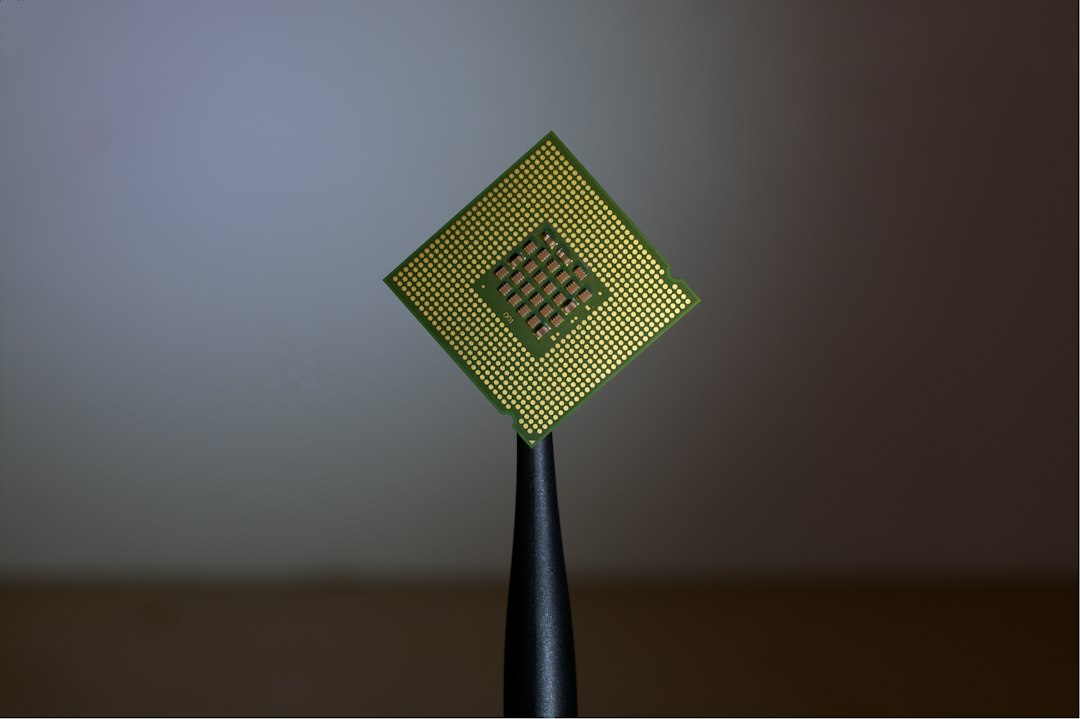
Photo by Brian Kostiuk on Unsplash
CPU Cache Prefetching: How Modern Processors Predict Your Data Access
Memory access is one of the primary bottlenecks in modern computing. While CPU clock speeds have increased dramatically over decades, memory latency has improved far more slowly. A cache miss that requires fetching data from main RAM can stall a processor for hundreds of cycles. Hardware prefetching is the mechanism CPUs use to hide this latency by predicting which memory addresses you’ll need next and loading them into cache before you ask.
The Memory Wall Problem
Modern processors can execute instructions at rates measured in billions per second, but main memory access takes 50-200 nanoseconds. In CPU cycles, that’s an eternity. Cache hierarchies help—L1 cache responds in 3-4 cycles, L2 in around 12, L3 in 40-75—but only if the data you need is already there. Without prefetching, sequential memory access patterns would constantly stall on cache misses, leaving the processor idle while waiting for data.
How Hardware Prefetchers Work
Hardware prefetchers sit between the cache hierarchy and memory subsystem, monitoring memory access patterns and making speculative requests. They operate transparently to software, requiring no explicit instructions from programmers.
The simplest prefetcher is the sequential or stride prefetcher. When it detects consecutive cache misses separated by a consistent stride—say, accessing every 8 bytes in an array—it begins fetching subsequent cache lines ahead of the actual requests. Most modern CPUs implement multiple prefetchers simultaneously: one tracking sequential access, another detecting strided patterns, and sometimes specialized prefetchers for instruction fetch.
More sophisticated implementations use stream buffers that track multiple concurrent access streams. If your code simultaneously iterates through two arrays, the prefetcher can recognize both patterns and fetch ahead on both. Some processors include prefetchers that recognize more complex patterns, like pointer-chasing through linked data structures, though these are harder to predict accurately.
The Speculation Trade-off
Prefetching is fundamentally speculative. Every prefetch consumes memory bandwidth and occupies cache space. When predictions are accurate, prefetching eliminates stalls and dramatically improves throughput. When predictions are wrong, prefetched data pollutes the cache, evicting useful data and wasting bandwidth that could serve actual demand.
This trade-off shapes prefetcher aggressiveness. Processors tune their prefetchers to be conservative enough to avoid excessive pollution but aggressive enough to stay ahead of demand. Many implementations use confidence mechanisms that ramp up prefetch distance as patterns persist and scale back when predictions fail.
Software Implications
Understanding prefetching helps explain performance characteristics that otherwise seem mysterious. Code with predictable access patterns—tight loops over arrays, sequential file reads—gets massive benefits. Random access patterns gain little. Strided access works well if the stride is consistent and not too large.
Cache-oblivious algorithms and data structure layout matter more than many developers realize. Placing frequently co-accessed data in adjacent memory locations allows the prefetcher to bring it in together. Conversely, structures that require chasing pointers through scattered memory regions defeat prefetching entirely.
Modern compilers sometimes emit software prefetch instructions that explicitly request data into cache. These complement hardware prefetching when the compiler can see access patterns the hardware cannot predict, but they require careful tuning. Prefetch too early and the data may be evicted before use; too late and you still stall.
Measuring Prefetcher Impact
Performance counters on most processors expose prefetcher activity: requests issued, accuracy rates, cache pollution metrics. On Intel processors, events like L2_RQSTS.PF_HIT and L2_RQSTS.PF_MISS show whether prefetched data was actually used. High prefetch miss rates indicate the prefetcher is guessing wrong and may benefit from tuning—either through code restructuring or, on some platforms, by adjusting prefetcher aggressiveness via model-specific registers.
Disabling prefetchers entirely (possible on many processors for diagnostic purposes) often reveals how much performance depends on them. Sequential workloads can slow down by 2-3x without prefetching, while random-access workloads show minimal change.
The Broader Pattern
Hardware prefetching exemplifies a fundamental principle in computer architecture: speculation as a latency-hiding technique. Branch predictors speculate on control flow, out-of-order execution speculates on instruction independence, and prefetchers speculate on data access. When patterns are predictable, speculation converts latency into throughput. When patterns are chaotic, speculation overhead exceeds its benefit. Writing performance-sensitive code means understanding which side of that line your access patterns fall on.