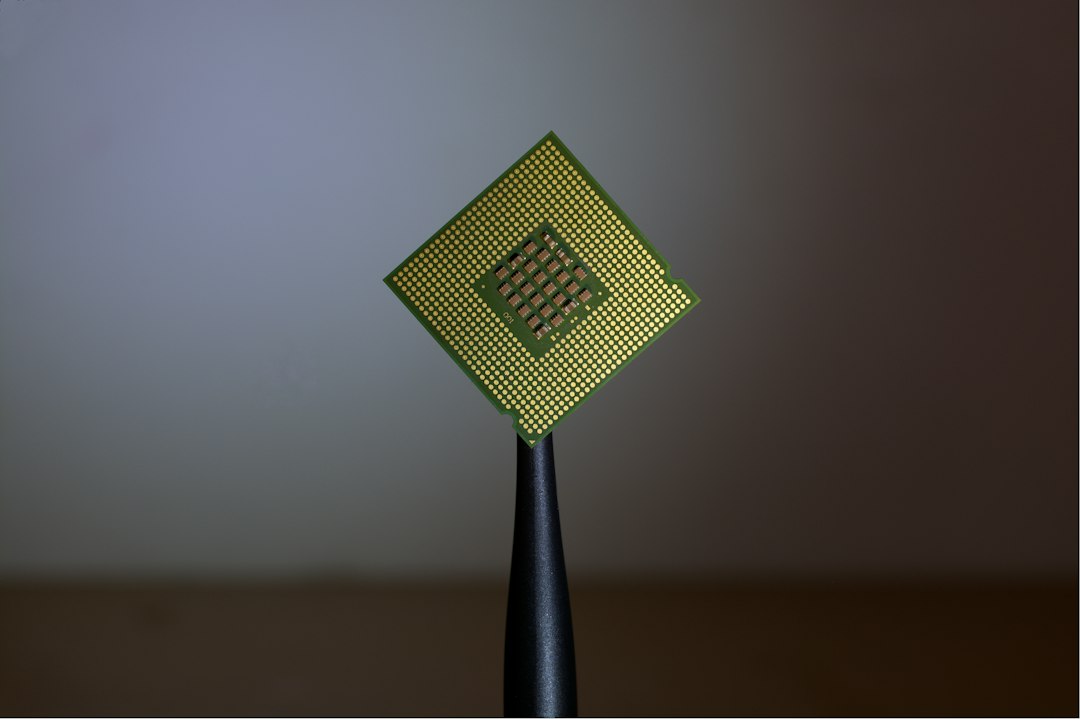
Photo by Brian Kostiuk on Unsplash
CPU Cache Warming: Paying the Access Pattern Tax Upfront
Modern CPUs spend most of their time waiting. A cache miss to main memory can cost 200+ cycles, turning what should be nanosecond operations into microsecond stalls. Cache warming—deliberately preloading data into the cache hierarchy before you need it—is one way to hide this latency, but it introduces tradeoffs that ripple through system design.
The Cold Cache Problem
When a thread starts executing, or when data access patterns shift, the CPU cache is cold. The first access to each cache line triggers a miss, blocking execution until the data arrives from DRAM. For workloads with predictable access patterns—request handlers, batch processors, periodic jobs—this cold-start penalty appears as a latency spike at the beginning of each work unit.
Database query engines hit this regularly. A freshly scheduled query thread starts with empty L1/L2 caches. The first few milliseconds are spent fetching index nodes, schema metadata, and query plan structures. By the time the cache warms naturally, the query may already be halfway done. Latency-sensitive workloads can’t afford this penalty.
Explicit Prefetching
The most direct cache warming technique is software prefetching: issuing explicit prefetch instructions to request cache lines before they’re accessed. Compilers can insert these automatically, but manual placement often yields better results because the developer understands the data dependency graph.
The challenge is timing. Prefetch too early and the data gets evicted before use. Prefetch too late and the instruction stalls waiting for memory. The ideal window is typically 100-300 cycles ahead—far enough to hide latency, close enough to avoid eviction. This distance changes with CPU model, cache size, and workload pressure.
Prefetching also burns memory bandwidth. Every prefetch competes with real memory traffic. If you guess wrong about what data you’ll need, you waste bandwidth and pollute the cache with useless lines. The cost is especially high on NUMA systems, where a mispredicted prefetch might pull data across sockets unnecessarily.
Priming Loops and Dry Runs
A coarser technique is running a simplified version of the real workload first. A request handler might iterate over its data structures in read-only mode before processing, touching every cache line once. A rendering engine might traverse the scene graph twice: once to warm caches, once to draw.
This approach is easier to implement than fine-grained prefetching, but the cost is obvious: you’re doing the work twice. Throughput drops by up to 50%, and total CPU time increases even if latency improves. It only makes sense when latency is paramount and CPU capacity is available.
Priming loops also assume your access pattern is deterministic. If the second pass touches different data than the first, the warm-up was wasted effort. Dynamic workloads—tree searches, hash table probes, pointer chasing—don’t benefit cleanly from this technique.
Process and Thread Preloading
Systems software sometimes warms caches by preloading entire processes. A container orchestrator might start a worker process, let it initialize and warm its instruction cache, then freeze it. Later, when a request arrives, the orchestrator clones the warm process with fork(), inheriting the parent’s cache-friendly memory layout.
This works because copy-on-write fork() preserves memory mappings. The child process starts with the same physical pages in CPU cache as the parent had, at least until it writes. Short-lived request handlers can complete before significant cache pollution occurs.
The downside is complexity. You need infrastructure to maintain warm standby processes, and you need workloads that actually benefit from instruction cache locality. Data cache warming is harder—most request-specific data isn’t knowable until the request arrives.
Hardware-Assisted Warming
Some hardware helps. Intel’s Cache Allocation Technology (CAT) lets you partition the last-level cache, dedicating slices to specific processes. A latency-sensitive service can keep its hot data structures resident even when batch jobs flood the rest of the cache.
Another approach is persistent memory. With Optane or similar technology, frequently accessed data structures can live in byte-addressable memory that’s faster than DRAM but larger than cache. This doesn’t eliminate cache misses, but it reduces the miss penalty from 200 cycles to 50-100.
Newer CPUs also support cache line locking or pinning, though OS and tooling support remains limited. The idea is to mark critical data as non-evictable, guaranteeing it stays warm. The tradeoff is reduced effective cache size for everything else.
When It’s Worth It
Cache warming makes sense when latency predictability matters more than throughput, when access patterns are known in advance, and when you have spare CPU cycles or memory bandwidth to burn. High-frequency trading systems, real-time rendering pipelines, and request-response services with strict SLOs are common candidates.
It’s rarely worth it for throughput-oriented batch workloads, where average performance matters more than peak latency. And it’s often counterproductive in memory-constrained environments, where aggressive prefetching causes more evictions than it prevents.
The real cost isn’t the prefetch instructions—it’s the engineering complexity. Cache warming requires deep knowledge of your data structures, access patterns, and hardware behavior. That knowledge becomes technical debt when the workload evolves or the hardware changes. Measure carefully before committing.