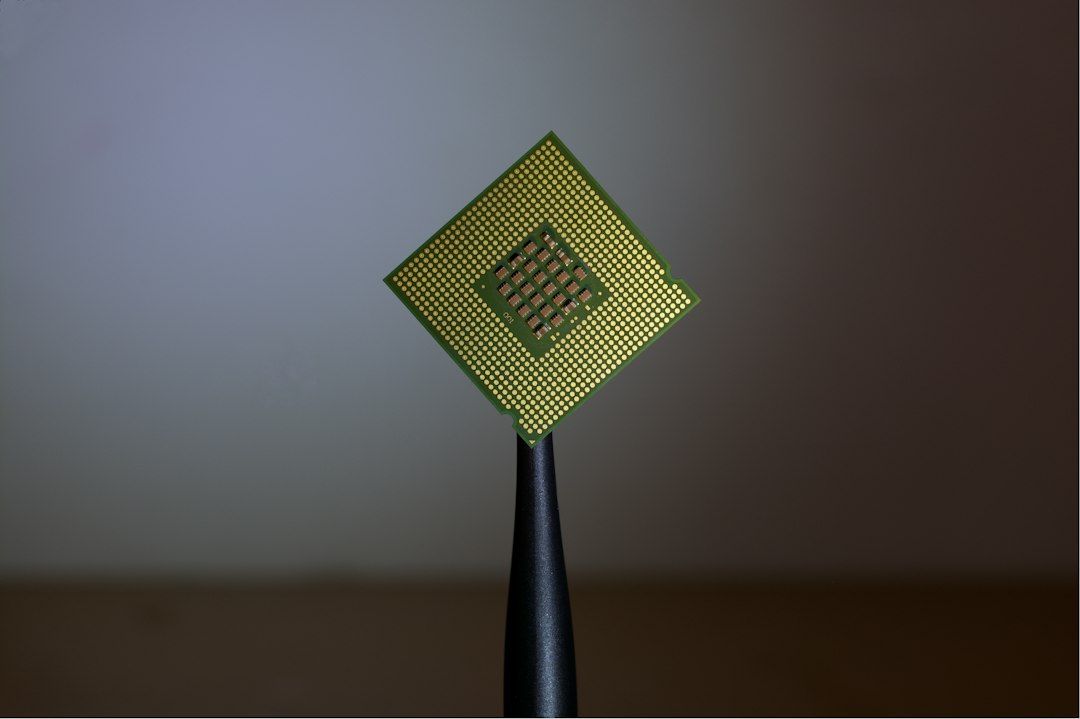
Photo by Brian Kostiuk on Unsplash
Huge Pages: Memory Translation Optimization
Modern operating systems manage memory in fixed-size chunks called pages. On x86-64 systems, the default page size is 4 KB. For most workloads, this granularity works fine. But for applications that touch large amounts of memory—databases, in-memory caches, scientific computing, machine learning training—the standard 4 KB page size creates a hidden performance bottleneck.
The problem lives in the Translation Lookaside Buffer (TLB), a small cache inside the CPU that stores virtual-to-physical address translations. Every memory access requires translating a virtual address to a physical one, and the TLB speeds this up. But the TLB is tiny, typically holding only a few hundred entries. With 4 KB pages, a TLB with 512 entries covers just 2 MB of memory. An application working with gigabytes of data will constantly miss the TLB, forcing expensive page table walks.
How Huge Pages Help
Huge pages solve this by using larger page sizes: 2 MB or 1 GB instead of 4 KB. With 2 MB pages, that same 512-entry TLB now covers 1 GB of memory—a 500x improvement. This dramatically reduces TLB misses for applications with large working sets.
The performance gains can be substantial. Redis, PostgreSQL, and other memory-intensive applications often see 5-15% throughput improvements with huge pages enabled. Workloads that scan large data structures or perform random access across gigabytes of memory benefit the most.
The tradeoff is inflexibility. Memory must be allocated in 2 MB or 1 GB chunks, which can lead to internal fragmentation. A process requesting 3 MB with 2 MB huge pages will consume 4 MB of physical memory. For systems running many small processes, this waste adds up.
Transparent Huge Pages
Linux introduced Transparent Huge Pages (THP) to get the benefits of huge pages without application changes. The kernel automatically promotes 4 KB pages to 2 MB pages when possible and demotes them when memory pressure increases.
THP sounds ideal in theory, but it introduces complexity. The kernel must defragment memory to create contiguous 2 MB regions, which can cause latency spikes. Page faults become more expensive because the kernel attempts to allocate huge pages first, falling back to regular pages on failure. Some workloads experience tail latency problems—Redis and MongoDB both recommend disabling THP for this reason.
The kernel’s defragmentation efforts can also consume significant CPU time. When memory becomes fragmented, the kernel’s khugepaged thread compacts memory in the background, but under heavy load this background work competes with application threads.
Explicit Huge Pages
The alternative is explicit huge pages, where the application or system administrator manually configures a huge page pool at boot time. The kernel reserves a fixed amount of memory as huge pages, and applications request them through special APIs or by mapping files in hugetlbfs.
This approach eliminates the runtime overhead of THP but requires upfront configuration. You need to know how much memory your application needs and reserve huge pages accordingly. Over-allocating wastes memory that can’t be used for anything else; under-allocating means the application falls back to regular pages.
Database systems like PostgreSQL and Oracle have tuning parameters specifically for huge pages. Java applications running on large heaps often benefit from huge pages, though the JVM must be explicitly configured to use them.
When to Use Huge Pages
Huge pages make sense for workloads with three characteristics: large memory footprints (multiple gigabytes), frequent memory access across that entire footprint, and relatively stable memory usage patterns. Databases, in-memory caches, high-performance computing applications, and large JVM heaps are all good candidates.
For workloads with small memory footprints, dynamic memory usage, or many short-lived processes, the overhead and fragmentation of huge pages outweigh the TLB benefits. Web servers handling many small requests, containerized microservices, and desktop applications typically don’t benefit.
The choice between transparent and explicit huge pages depends on predictability. If your workload is stable and you can tune it, explicit huge pages avoid runtime overhead. If your workload varies or you want a hands-off approach, THP might work—but monitor tail latencies carefully.
Huge pages are a classic systems optimization: significant gains for the right workload, but not a universal win. Understanding your memory access patterns and TLB behavior determines whether the complexity is worth it.