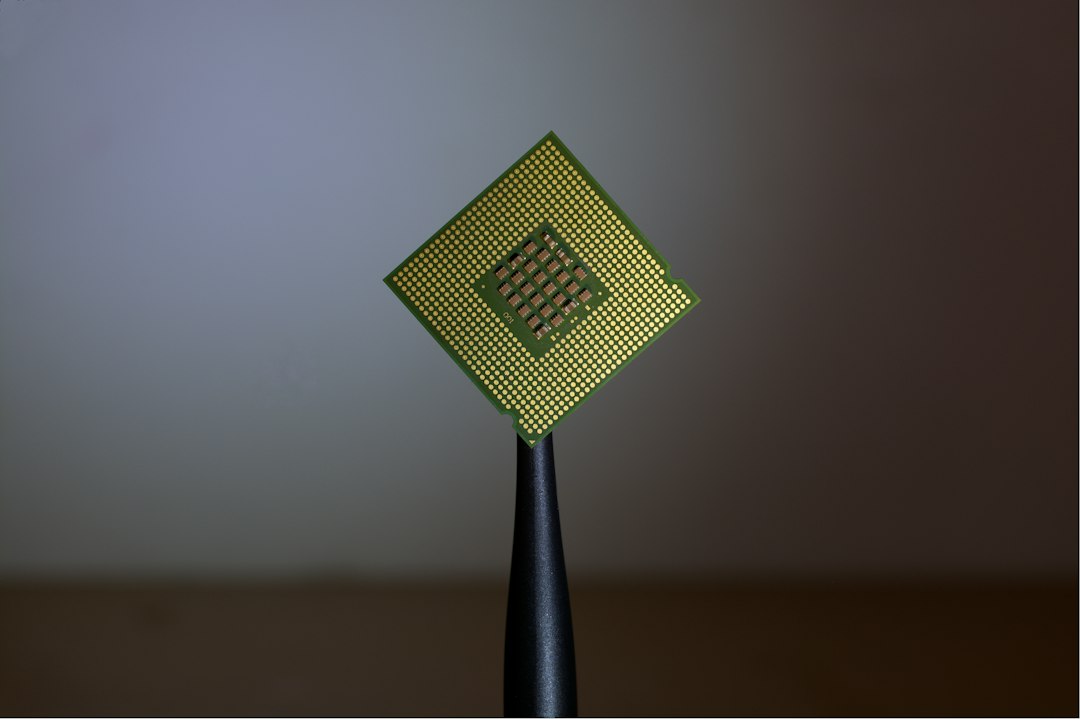
Photo by Brian Kostiuk on Unsplash
Instruction Prefetching: Feeding the CPU Pipeline
Modern CPUs execute billions of instructions per second, but they can only achieve this throughput when the instruction pipeline stays full. Instruction prefetching is the hardware mechanism that attempts to keep executable code flowing into the CPU before it’s actually needed. When it works well, you never notice it. When it fails, your processor stalls.
The Pipeline Starvation Problem
A deeply pipelined CPU can have 15-20 stages between instruction fetch and retirement. If the fetch unit waits until an instruction is actually needed, those pipeline stages sit empty—a condition called a pipeline bubble. At 4+ GHz clock speeds, even a few cycles of starvation represents wasted billions of potential operations per second.
The fetch unit needs to stay ahead of execution by predicting which instructions will be needed next. For straight-line code this is trivial: just fetch sequentially. The challenge emerges with branches, function calls, and indirect jumps where the next instruction address isn’t obvious until the branch itself executes.
How Prefetchers Work
Modern x86 and ARM processors employ multiple prefetching strategies working in parallel. The simplest is sequential prefetching—always fetch the next cache line of instructions. This works perfectly for tight loops and straight-line code.
Branch prediction augments this by forecasting whether conditional branches will be taken or not. The branch target buffer (BTB) caches previous branch outcomes and destination addresses, allowing the prefetcher to speculatively fetch down the predicted path. Return address stacks predict function return targets by tracking call/return pairs.
More sophisticated processors include pattern-based prefetchers that detect striding access patterns and stream prefetchers that recognize sequential instruction access across multiple cache lines. These mechanisms work in the background, issuing memory requests to pull instructions from L2/L3 cache or DRAM into the L1 instruction cache before the fetch unit reaches them.
The Cost of Misprediction
When branch prediction guesses wrong, the prefetcher has fetched the wrong instructions and filled pipeline stages with work that must be discarded. The CPU flushes the pipeline back to the mispredicted branch, fetches the correct instruction stream, and refills the pipeline. This typically costs 15-20 cycles on modern processors—a significant penalty.
Code with unpredictable branches pays this cost repeatedly. Examples include hash table probing with chained collision resolution, tree traversals with random access patterns, and any algorithm driven by external data with low entropy. The instruction stream zigs and zags in ways the branch predictor cannot forecast.
Optimizing for the Prefetcher
Developers can structure code to help instruction prefetchers. Keep hot loops small enough to fit in the L1 instruction cache (typically 32-64 KB). This eliminates fetch latency entirely once the loop is cached. Avoid deeply nested conditionals where possible—flattening branches with branchless techniques like conditional moves can eliminate misprediction penalties.
Function call overhead matters here too. Indirect calls through function pointers are harder to predict than direct calls. Virtual function dispatch in C++ and interface calls in Java/Go introduce indirect jumps that stress the BTB. Devirtualization optimizations (profile-guided or link-time) can convert these to direct calls when the target is provable.
Profile-guided optimization (PGO) helps by reordering basic blocks to place the most likely execution path sequentially in memory. The prefetcher then fetches the common case without jumping, while unlikely paths (error handling, cold features) are moved out of line.
Prefetching and Spectre
The Spectre CPU vulnerability exposed a dark side of speculative instruction prefetching. By training the branch predictor to mispredict specific branches, attackers could cause the CPU to speculatively execute instructions that leak sensitive data through cache side channels. Mitigations like retpolines, indirect branch prediction barriers, and microcode updates have blunted these attacks but added measurable overhead by constraining speculation.
This security/performance tension is now fundamental to CPU design. Future processors must balance aggressive speculation (for performance) against the information leakage risks of executing code that shouldn’t run.
The Bigger Picture
Instruction prefetching is one layer in a deep stack of predictive mechanisms keeping modern CPUs fed. It works in concert with data prefetchers, out-of-order execution, and speculative execution to hide memory latency and maximize instruction throughput. The trend toward wider superscalar execution and larger instruction windows makes these prefetchers even more critical—a 6-wide decode unit needs a steady stream of instructions or it becomes a 1-wide bottleneck.
Understanding instruction prefetching helps explain why certain code patterns run fast and others don’t. Small changes in code layout, branch structure, or call patterns can dramatically affect whether the prefetcher keeps up or constantly mispredicts. The CPU is always trying to guess what you’ll execute next. Writing code that makes those guesses easy is the path to performance.