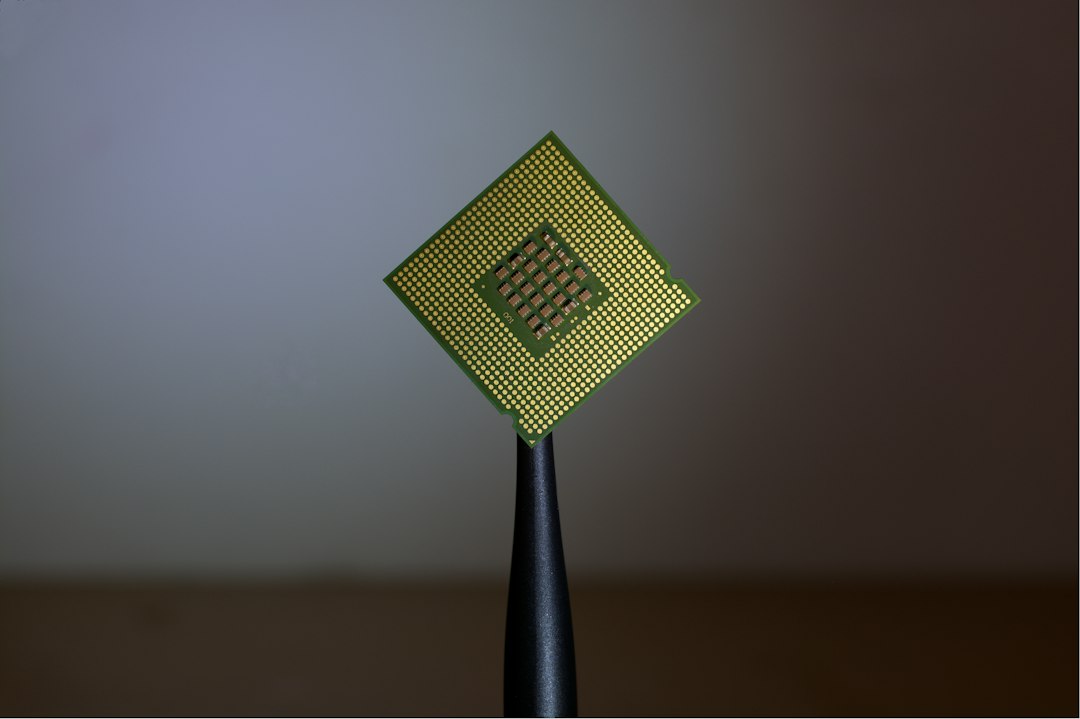
Photo by Brian Kostiuk on Unsplash
Instruction Retirement: Maintaining Program Order in Out-of-Order CPUs
Modern CPUs execute instructions out of order to maximize throughput, but programs expect predictable, sequential behavior. The instruction retirement mechanism reconciles these competing needs, ensuring that even though instructions complete at different times internally, their effects become visible to the rest of the system in strict program order.
The Out-of-Order Paradox
A CPU might execute instruction 7 before instruction 3 finishes, but it cannot make instruction 7’s results permanent until instructions 1 through 6 have all retired. This constraint preserves program semantics: exceptions, memory ordering, and architectural state all remain consistent with the original instruction stream.
The reorder buffer (ROB) makes this possible. When the front-end decodes instructions, it allocates a ROB entry for each one in program order. As instructions flow through the execution units out of order, they mark their ROB entries as complete. But completion is not retirement. An instruction retires only when it reaches the head of the ROB and all preceding instructions have also completed.
What Retirement Actually Means
Retirement is the moment an instruction’s results become architecturally visible. Before retirement, speculative results live in temporary storage—renamed physical registers, store buffers, or other internal structures. After retirement, the instruction updates the architectural register file, commits stores to the cache hierarchy, and releases resources like ROB entries and physical registers.
If an exception or branch misprediction occurs, the CPU can discard all instructions after the problem point without unwinding architectural state, because those later instructions never retired. The ROB provides a clean checkpoint: everything before the head is committed, everything after is provisional.
Retirement Bandwidth
The retirement stage has finite bandwidth, typically retiring between four and eight instructions per cycle in high-end processors. This seems paradoxical—why would a CPU capable of issuing ten micro-ops per cycle bottleneck at retirement?
Because retirement is inherently sequential. The ROB head advances in strict program order, and each instruction must perform finalization work: updating the register alias table, freeing physical registers from the previous mapping, and committing stores. Complex instructions may take multiple cycles to retire even after they finish executing.
Retirement bandwidth becomes the limiting factor when a workload has high instruction-level parallelism but most instructions complete quickly. The CPU stays full of in-flight work, execution units finish early, and the ROB fills with completed but not-yet-retired instructions. The retirement stage can’t drain the ROB fast enough, creating backpressure that stalls dispatch.
Retirement and Memory Ordering
Store instructions present a special challenge. A store retires when it moves from the ROB to the store buffer, but the data doesn’t reach cache until later. The store buffer preserves program order among stores and enforces memory ordering rules like TSO or release-acquire semantics.
Loads that depend on prior stores check the store buffer first through a mechanism called store-to-load forwarding. If a matching address is found, the CPU forwards the data directly, avoiding a cache lookup. But if the store hasn’t retired yet, the load must wait even if the store data is ready, because stores can only forward from the store buffer, not from speculative ROB entries.
Retirement in the Presence of Exceptions
Precise exceptions require that when a fault occurs, all instructions before the faulting instruction have completed, and no instruction after it has modified architectural state. The ROB enables this naturally: retirement order is program order, so when an exception is detected, the CPU retires instructions up to the faulting one, then flushes the ROB and redirects the front-end to the exception handler.
Speculative execution side channels complicate this picture. Instructions that should never retire because they follow a mispredicted branch can still affect microarchitectural state like caches and branch predictors before they’re flushed. The retirement boundary prevents them from changing architectural registers or memory, but it doesn’t erase their transient effects on shared structures.
Why Retirement Isn’t Free
Every cycle, the retirement logic must examine the ROB head, determine if the instruction can retire, update the commit map, free old physical registers, and advance the head pointer. For a four-wide retirement design, this happens in parallel for up to four instructions simultaneously, requiring comparators, priority logic, and state updates across the pipeline.
Large ROBs complicate this further. A 256-entry ROB needs eight-bit pointers, more complex wrap-around logic, and wider structures to track completion status. The ROB is often one of the most power-hungry structures in the core, consuming area and energy proportional to its size.
The retirement stage represents a fundamental tension in processor design: out-of-order execution needs disorder to extract parallelism, but correctness demands order at the boundary. The reorder buffer and retirement logic form the membrane that separates speculative internal state from the committed architectural view, letting processors have both.