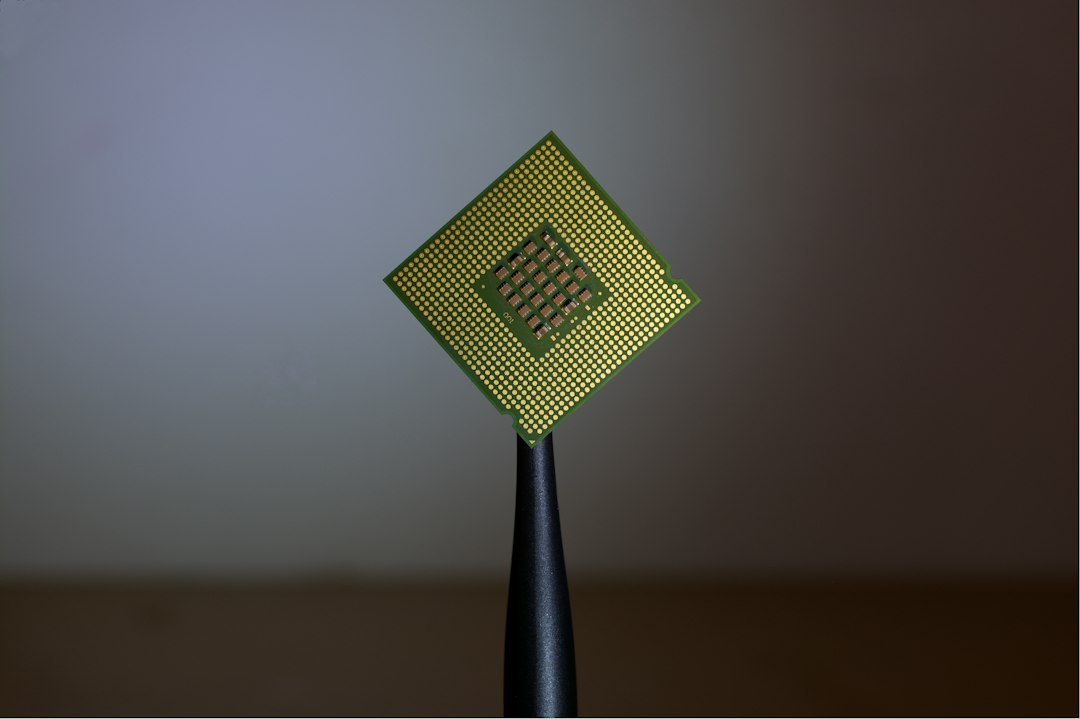
Photo by Brian Kostiuk on Unsplash
Kernel TLB Shootdowns: Cross-Core Cache Invalidation Overhead
Every CPU core maintains a Translation Lookaside Buffer (TLB) to cache recent virtual-to-physical address translations. When the kernel modifies page tables—during memory unmapping, permission changes, or process termination—it must invalidate stale TLB entries across all cores. This cross-core synchronization operation is called a TLB shootdown, and it represents one of the most expensive operations in modern multi-core systems.
Why TLB Shootdowns Are Necessary
Virtual memory systems require that all cores maintain a consistent view of the address space. When a process unmaps memory or changes page permissions, the kernel updates the page tables in RAM. But each core has cached translations in its local TLB that now point to stale information. Without invalidation, a core might continue using an old translation, potentially accessing freed memory or bypassing new permission restrictions.
The kernel can’t simply invalidate its own TLB and move on. It must coordinate with every other core that might have cached the affected translations. This coordination happens through inter-processor interrupts (IPIs), where the initiating core sends interrupt signals to other cores, forcing them to flush their TLBs and acknowledge completion.
The Synchronization Cost
TLB shootdowns are expensive because they require global synchronization across the entire system. The initiating core must:
- Send IPIs to all relevant cores
- Wait for each core to handle the interrupt
- Wait for acknowledgment from each core
- Only then continue execution
This creates a synchronization barrier. If one core is in a long-running interrupt handler or has interrupts disabled, every other core waits. The latency scales with the number of cores—a shootdown on a 128-core system involves coordinating far more parties than on a 4-core laptop.
Modern CPUs try to minimize this overhead through hardware optimizations like TLB tagging (which allows multiple address spaces to coexist in the TLB) and partial invalidation (which flushes only specific entries rather than the entire TLB). But the fundamental synchronization cost remains.
Real-World Performance Impact
TLB shootdowns become problematic in several common scenarios. Memory-intensive applications that frequently allocate and free memory trigger constant page table modifications. Multi-threaded applications with shared memory regions can generate shootdowns whenever threads modify permissions or unmap shared pages. Virtual machine hypervisors experience shootdowns when guest operating systems manipulate their own page tables, requiring nested invalidation.
Database systems with large buffer pools often show shootdown overhead during cache eviction, where releasing memory back to the OS triggers invalidation. Web servers handling many short-lived connections see shootdowns during process cleanup when worker processes terminate.
Mitigation Strategies
Performance-sensitive systems employ several strategies to reduce shootdown overhead. Batching page table updates allows the kernel to accumulate multiple changes and issue a single shootdown instead of many small ones. Some kernels implement lazy shootdown, deferring invalidation until absolutely necessary—though this increases complexity around memory safety.
Large pages (2MB or 1GB instead of 4KB) reduce the total number of page table entries and thus the frequency of modifications. Thread-local allocators and memory pools minimize the need to return memory to the kernel, keeping allocations within user space where they don’t trigger shootdowns.
Application developers can reduce shootdown pressure by avoiding frequent memory mapping changes, reusing allocated memory rather than repeatedly allocating and freeing, and using huge pages where appropriate. In containerized environments, reducing the rate of container churn and pod restarts limits the frequency of large-scale memory cleanup operations.
The Multi-Core Tax
TLB shootdowns represent a fundamental cost of cache coherence in multi-core systems. As core counts increase, this coordination overhead grows, creating a scalability ceiling for workloads that frequently modify memory mappings. It’s a reminder that shared-memory parallel computing isn’t free—maintaining the illusion of a unified address space across dozens or hundreds of cores requires expensive synchronization protocols that can dwarf the cost of the actual memory operations being performed.