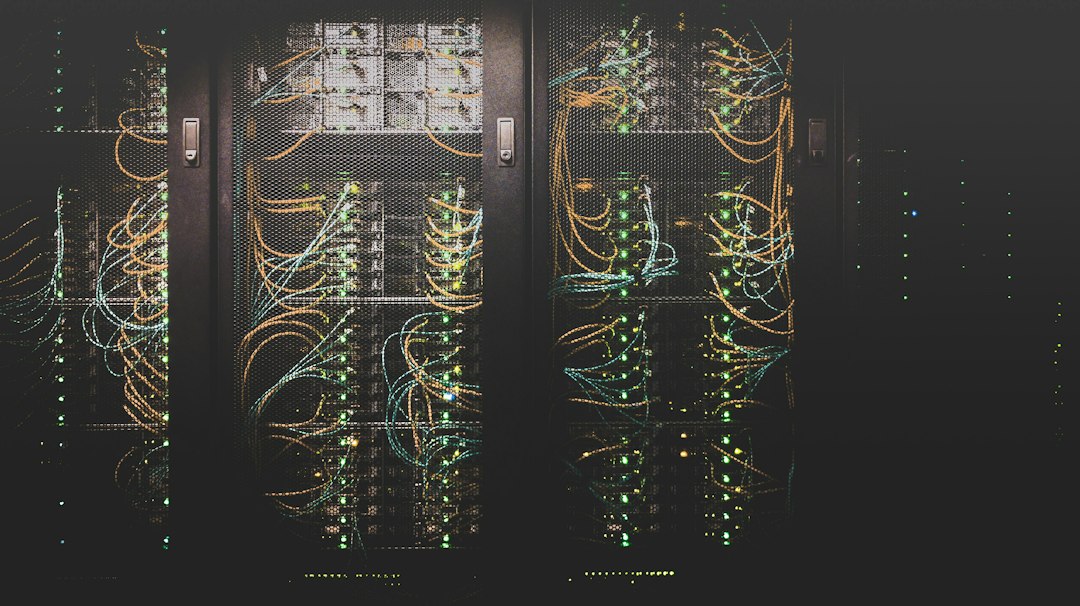
Photo by Taylor Vick on Unsplash
The Rise of the Neocloud: Why GPU Capacity Became Its Own Market
Cloud computing used to have three obvious players and a handful of smaller challengers competing on the same basic pitch: rent our servers instead of buying your own. Over the past several years, a new category of provider has carved out its own niche by focusing almost entirely on one resource: GPUs for AI training and inference. Industry watchers have started calling these companies “neoclouds,” and understanding why they exist says a lot about how compute economics have shifted in the AI era.
Why GPUs Broke the Old Cloud Model
Traditional cloud providers built their business on generality. A virtual machine can run a web server, a database, a batch job, or almost anything else, and the provider can slice up commodity CPU capacity flexibly across thousands of tenants. That flexibility is what makes hyperscale clouds efficient: idle capacity in one region or workload can absorb demand from another.
High-end GPUs used for AI workloads don’t fit that model as neatly. They are expensive, supply has been constrained relative to demand, and the workloads that need them are often large, long-running training jobs rather than the bursty, easily multiplexed traffic that made commodity cloud economics work. A company that wants a few thousand top-tier GPUs for a multi-month training run isn’t looking for elastic autoscaling. It’s looking for guaranteed capacity, often reserved months in advance under long-term contracts.
That gap between what hyperscalers optimized for and what AI labs actually needed created room for new entrants.
What Neoclouds Actually Sell
Neoclouds are companies that build or lease data center capacity specifically to offer GPU compute, often with less of the surrounding platform (managed databases, serverless functions, identity services) that defines a full hyperscale cloud. Some own their hardware outright, some operate under financing arrangements where GPU vendors or lenders effectively back the capital purchase, and some resell capacity from larger operators.
The pitch to customers is usually one of two things: better price-per-GPU-hour than a hyperscaler, or access to capacity that hyperscalers can’t offer on the customer’s timeline because their own GPU supply is already committed elsewhere. For AI labs and startups burning through funding on compute, both matter. A meaningful gap in GPU pricing or a few months of earlier access can change a company’s cost structure or its ability to ship a model on schedule.
The Financial Engineering Underneath
What makes this market structurally different from earlier cloud waves is how capital-intensive it is up front. GPUs depreciate, technology generations turn over quickly, and the hardware itself is often financed through debt secured against future contracted revenue. That means a neocloud’s business is only as solid as its customer contracts and its ability to keep utilization high enough to service that debt as newer chips arrive and older ones lose value.
This creates a tighter coupling between AI demand cycles and data center financing than existed in the previous cloud era. When demand for training runs cools or shifts toward more efficient models that need less raw compute, the effect flows quickly into capacity providers whose revenue depends on long contracts signed during a demand peak.
Where This Leaves Buyers
For companies buying compute, the practical upshot is that “cloud provider” is no longer a single category. Choosing between a hyperscaler and a neocloud increasingly means trading off breadth of platform services against price, availability, and contract flexibility for raw GPU access. Some organizations end up doing both: running general infrastructure on a hyperscaler while sourcing dedicated training capacity from a neocloud under a separate contract.
That kind of workload-specific sourcing wasn’t really a decision most infrastructure teams had to make a decade ago. It’s a reasonable sign of how much a single resource, the GPU, has reshaped the economics of an entire industry.