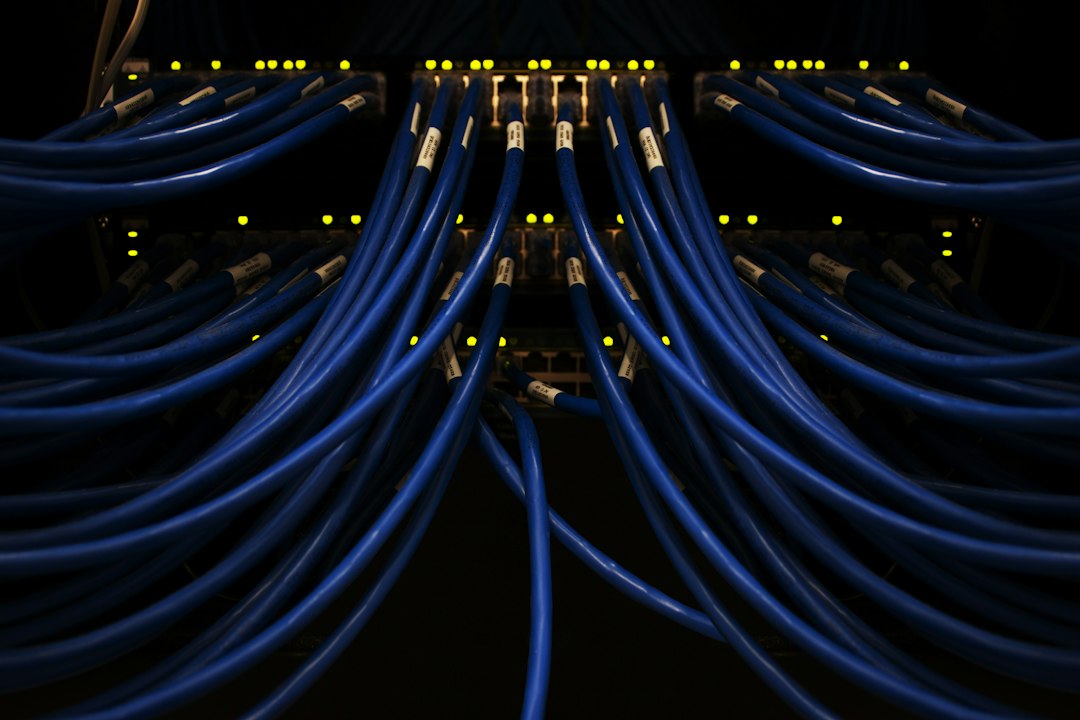
Photo by Scott Rodgerson on Unsplash
Network Partition Testing: Why Simulating Failure Is So Hard
Distributed systems are built to survive failure, but the most insidious failures aren’t clean crashes or obvious hardware faults. They’re network partitions: scenarios where parts of a system can’t communicate with each other, yet each part continues running independently. These “split brain” conditions expose edge cases that crash testing and load testing never touch.
Network partition testing—sometimes called “partition tolerance testing” or “split-brain testing”—deliberately severs communication between nodes to verify that a distributed system behaves correctly when the network fractures. The challenge isn’t just introducing failures. It’s simulating the messy, asymmetric, and partial failures that occur in production.
Why Partitions Are Different
When a server crashes, it stops sending messages. Monitoring detects the silence, and failover begins. A partition is more subtle: the partitioned node is still alive, still processing requests, and still convinced it’s doing the right thing. Meanwhile, the rest of the cluster has moved on without it.
Partitions can be symmetric—where two groups of nodes lose contact entirely—or asymmetric, where node A can reach node B, but B cannot reach A. They can be partial, affecting only certain routes or protocols. Cloud environments add another layer: partitions can happen between availability zones, between a control plane and data plane, or even within a single rack due to misconfigured routing.
These scenarios break assumptions baked into many systems. Raft and Paxos handle symmetric partitions well, but asymmetric partitions can stall progress or cause leaders to flap. Databases that rely on quorum reads can serve stale data if the partition isolates a minority that doesn’t realize it’s partitioned. Microservices that assume “if I can’t reach the auth service, deny the request” may lock users out unnecessarily during transient splits.
The Simulation Problem
Introducing a partition in a test environment sounds simple: block traffic with iptables, kill a network interface, or use a chaos engineering tool to inject latency. But these techniques rarely mimic real partitions.
Real-world partitions are often partial and protocol-specific. A misconfigured firewall might block TCP traffic on one port while leaving others open. A routing loop might affect only certain IP ranges. A congested switch might drop packets intermittently, creating a gray failure where some messages arrive and others don’t.
Most partition testing tools operate at the wrong layer. Blocking traffic at the kernel level with iptables is coarse: it severs all communication, not just the subset that would fail in production. Container orchestrators like Kubernetes add another wrinkle—pods can migrate, IP addresses change, and network plugins introduce their own failure modes that don’t exist in bare-metal deployments.
Timing matters too. A partition that lasts 10 seconds exercises different code paths than one that lasts 10 minutes. Transient partitions can trigger retries and exponential backoff logic. Long partitions force systems to reconcile divergent state after healing. Testing both requires a framework that can precisely control partition duration and sequence multiple failures.
Approaches That Work
The most effective partition testing happens in simulated environments where the network is fully controlled. Jepsen, the distributed systems testing framework, runs each node in a controlled process and uses a custom network layer to inject partitions at the message level. This lets tests create asymmetric partitions, delay specific messages, and reorder packets—scenarios that are difficult to reproduce with iptables alone.
For systems that can’t run in simulation, proxy-based partitioning offers more control than firewall rules. Tools like Toxiproxy and Muxy sit between nodes and selectively drop, delay, or corrupt traffic. This enables partial partitions—where, say, database writes succeed but replication traffic fails—and protocol-specific failures that mimic real production issues.
Deterministic replay is another angle. Some systems log all network events during normal operation, then replay those logs in a test environment with injected partitions. This approach combines real workloads with synthetic failures, surfacing bugs that only occur under specific sequences of client requests and network conditions.
What to Test For
A good partition test doesn’t just verify that the system stays up. It checks consistency guarantees. Can a partitioned node accept writes that conflict with the majority? Does the system correctly reject reads from a stale replica? When the partition heals, does reconciliation preserve causality, or do updates get silently dropped?
It also tests operational behavior. Does monitoring correctly detect the partition, or does it flood operators with false alarms? Do retry loops amplify the problem by saturating the network when it comes back? Does the system recover automatically, or does it require manual intervention to rejoin nodes?
The hardest bugs appear only when partitions interact with other failures. A partition plus a leader crash. A partition during a schema migration. A partition while resharding is in progress. These compound scenarios are where subtle race conditions and state machine bugs hide.
Why It Matters
Network partitions aren’t edge cases. In cloud environments, they’re a fact of life. Availability zone failures, misconfigurations, and transient routing issues happen often enough that every distributed system will eventually face one. The question isn’t whether your system will be partitioned—it’s whether it will handle the partition correctly.
Testing for partitions isn’t about finding the perfect simulation. It’s about stressing the system in ways that expose incorrect assumptions, then fixing those assumptions before they cause data loss or downtime in production. The goal is to turn network partitions from a catastrophic unknown into a known, understood, and manageable failure mode.