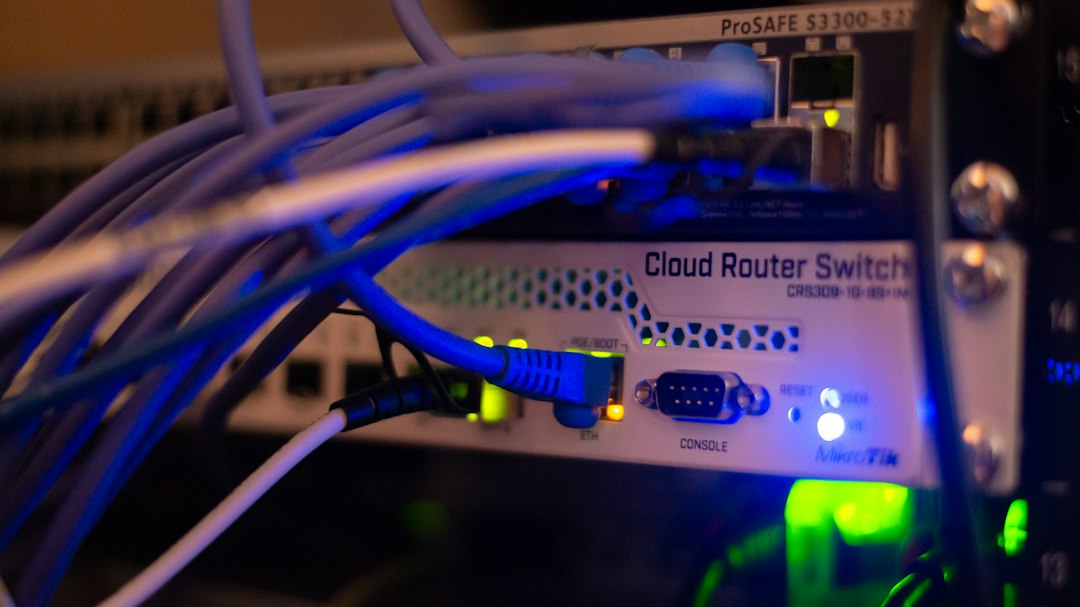
Photo by Albert Stoynov on Unsplash
Why Multi-Tenant SaaS Systems Keep Reinventing the "Noisy Neighbor" Problem
Anyone who has run a multi-tenant service has felt it: one customer’s traffic spike, one poorly written query, or one runaway batch job suddenly makes everyone else’s experience worse. This is the “noisy neighbor” problem, and despite being one of the oldest known failure modes in shared infrastructure, it keeps resurfacing in new forms as architectures evolve.
The Fundamental Tension
Multi-tenancy exists because sharing infrastructure is economically necessary. Dedicating a full database, compute cluster, or network path to every customer would be prohibitively expensive for most SaaS businesses, especially at the low end of the customer base where usage is light and margins are thin. So providers pool resources — CPU, memory, disk I/O, network bandwidth, database connections — across many tenants and rely on scheduling, quotas, and isolation mechanisms to keep them from interfering with each other.
The problem is that perfect isolation and efficient sharing are in direct tension. The more strictly you partition resources, the less you benefit from statistical multiplexing — the fact that not all tenants use their peak capacity at the same time. The more loosely you share, the more exposed you are to one tenant’s behavior degrading another’s experience. Every multi-tenant system lives somewhere on this spectrum, and most systems slide along it as they grow.
Where It Shows Up
Noisy neighbor problems tend to surface at whichever layer is shared most loosely. In the early days of a platform, this is often the database: one tenant’s expensive analytical query or unindexed scan can consume enough I/O and lock contention to slow down queries from every other tenant on the same instance. As systems mature and databases get sharded or given per-tenant resource governors, the bottleneck often shifts to shared caches, message queues, or connection pools — a single tenant flooding a queue with retries can starve throughput for everyone downstream.
At the infrastructure layer, the same dynamic plays out with CPU scheduling on shared hosts, network bandwidth on shared links, and even shared rate limits on upstream APIs a service depends on. Cloud providers face this at massive scale with their own customers, which is part of why hypervisor-level CPU and I/O throttling exists — but the same category of problem shows up inside a single company’s internal platform serving multiple product teams, or inside a SaaS company serving external tenants.
Why It’s Hard to Solve Once and For All
There’s no single fix because the problem recurs at every layer of the stack, and each layer requires a different mitigation:
- Compute is addressed with scheduling quotas, cgroups-style resource limits, and CPU pinning to prevent one process from starving others sharing a core.
- Storage I/O is addressed with per-tenant throughput and IOPS caps, often enforced at the storage engine or hypervisor level.
- Database contention is addressed with query timeouts, statement-level resource governors, and sometimes physical sharding so heavy tenants get isolated instances.
- Network bandwidth is addressed with traffic shaping and per-tenant rate limiting at the load balancer or proxy layer.
- Shared application-level resources like connection pools or caches require explicit per-tenant quotas, since generic OS-level isolation doesn’t reach into application logic.
Solving noisy neighbor issues comprehensively means applying isolation at every one of these layers simultaneously, and most engineering organizations don’t do this proactively — they patch the layer that’s currently causing incidents, which is why the problem seems to “move” rather than disappear.
Isolation Strategies in Practice
Broadly, teams reach for a few recurring patterns. Tiered isolation puts high-usage or high-paying tenants on dedicated infrastructure while pooling smaller tenants together, trading some efficiency for predictability where it matters most commercially. Fair-share scheduling algorithms — similar in spirit to CPU schedulers — allocate shared resources proportionally rather than first-come-first-served, so no single tenant can monopolize a queue or connection pool. Circuit breakers and per-tenant rate limits act as safety valves, degrading or rejecting a misbehaving tenant’s requests before they can cascade into a platform-wide incident.
Bulkheading, borrowed from ship design, is the architectural version of this idea: partitioning a system into isolated compartments so that a failure or overload in one doesn’t flood the rest. Applied to multi-tenant systems, this might mean separate connection pools, separate thread pools, or separate queue partitions per tenant or tenant tier, even when they run on shared physical infrastructure.
The Economic Reality
Ultimately, noisy neighbor mitigation is a cost-allocation problem disguised as a technical one. Every isolation mechanism trades some efficiency for predictability, and the right amount of isolation depends on what a business is willing to spend to avoid the reputational and support cost of tenants degrading each other’s experience. This is why the problem never gets permanently “solved” — as a platform’s tenant mix, scale, and usage patterns shift, the acceptable tradeoff point shifts too, and the isolation boundaries that made sense at one stage of growth need to be redrawn at the next.