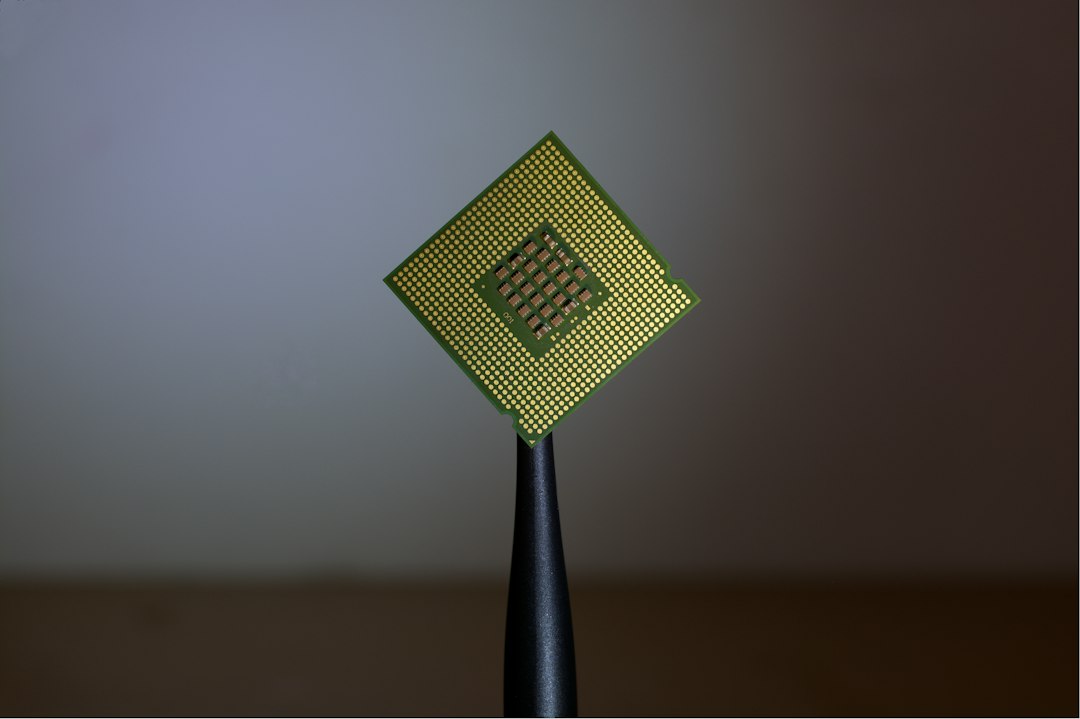
Photo by Brian Kostiuk on Unsplash
Out-of-Order Execution: How CPUs Hide Latency
Your CPU doesn’t execute instructions in the order your compiler emits them. Instead, it reorders them dynamically at runtime to keep execution units busy while waiting for slow operations to complete. This out-of-order execution is one of the foundational techniques that lets modern processors achieve high throughput despite memory latencies measured in hundreds of cycles.
The Problem: Dependencies and Latency
A simple sequence of instructions often contains dependencies. If instruction B needs the result of instruction A, the CPU must wait. When instruction A is a memory load that misses in cache, that wait might be 200 cycles or more. During that time, a naive in-order processor would stall, leaving execution units idle.
Out-of-order execution solves this by looking ahead in the instruction stream. If instruction C doesn’t depend on A or B, the CPU can execute it immediately rather than waiting. The processor maintains the architectural illusion that instructions completed in program order, but the actual execution happens whenever data becomes available.
How It Works: Rename, Schedule, Retire
The process breaks into three stages. First, the CPU renames registers to eliminate false dependencies. When two unrelated instructions happen to use the same architectural register, renaming maps them to different physical registers so they can execute in parallel.
Next, instructions enter a reservation station or reorder buffer. The scheduler tracks which instructions have their operands ready and dispatches them to available execution units. An instruction that loads from memory might sit waiting while dozens of subsequent independent instructions execute.
Finally, instructions retire in program order. Even if instruction C finished before instruction A, the CPU only makes C’s results architecturally visible after A and B complete. This maintains the sequential execution model that software expects, ensuring exceptions and branch mispredictions can be handled correctly.
The Instruction Window
The CPU can only look ahead so far. The instruction window—typically 200 to 600 instructions in modern processors—limits how much reordering is possible. A larger window lets the CPU find more independent work to hide latency, but it requires more hardware to track dependencies and manage state.
Long dependency chains limit effectiveness. If you have a hundred instructions that each depend on the previous one, no amount of reordering helps. The CPU can only parallelize genuinely independent work. This is why memory-bound code with pointer chasing performs poorly: each load depends on the previous one, creating a serial chain the processor can’t optimize around.
Memory Ordering and Speculation
Out-of-order execution interacts with memory consistency models in subtle ways. The CPU may execute loads and stores out of order, but it must respect the ordering rules the architecture defines. x86 provides relatively strong ordering guarantees, while ARM is more relaxed, allowing aggressive reordering unless explicit barriers are used.
The processor also speculates aggressively. It predicts branch outcomes and executes instructions from the predicted path before confirming the branch resolved correctly. If the prediction was wrong, it discards the speculative work and restarts from the correct path. This speculation compounds with out-of-order execution: the CPU might be executing instructions from a speculative path, reordered relative to program order, while earlier branches are still resolving.
Performance Implications
Well-written code with independent operations benefits enormously. Loop unrolling, for example, exposes more parallelism by creating multiple independent iterations the CPU can interleave. Compiler optimizations often focus on breaking false dependencies and increasing instruction-level parallelism.
Conversely, tight loops with recurrent dependencies leave performance on the table. A loop that accumulates values into a single variable forces serial execution. Techniques like manual accumulator splitting—maintaining multiple independent sum variables—let the CPU parallelize the work.
Cache misses remain expensive despite out-of-order execution, but their cost is bounded by how much independent work exists. A cache miss in a tight dependency chain stalls everything. The same miss in code with abundant parallelism might be almost fully hidden.
Security Considerations
Out-of-order execution and speculation enabled microarchitectural side-channel attacks like Spectre. Because the CPU speculatively executes instructions that shouldn’t run under correct program semantics, attackers can trick it into leaking data through timing side channels. Mitigations often involve inserting serialization barriers that limit speculation, trading security for some performance.
The same hardware mechanisms that improve throughput create subtle timing channels. The reorder buffer, reservation stations, and execution port contention all leave observable traces. In security-critical contexts, constant-time code must account not just for the instruction sequence but for how the CPU might reorder and parallelize it.
The Invisible Foundation
Out-of-order execution is transparent to most software. You write code assuming sequential semantics, and the CPU delivers sequential results while internally exploiting parallelism you never explicitly requested. This abstraction is powerful but leaky: performance depends on patterns the processor can parallelize, and the gap between best-case and worst-case behavior can be an order of magnitude.
Understanding out-of-order execution doesn’t mean you hand-optimize every loop. But recognizing when you’re creating long dependency chains or when independent work could be exposed helps you write code that lets the hardware do what it does best.