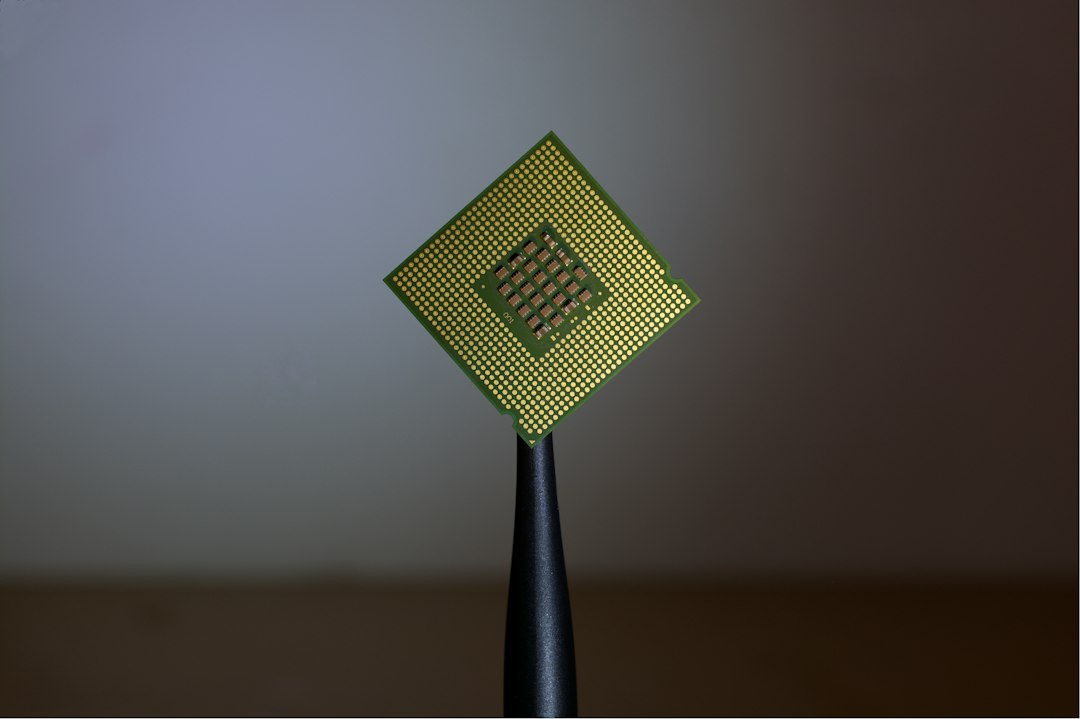
Photo by Brian Kostiuk on Unsplash
Register Pressure: When CPUs Run Out of Fast Storage
Modern CPUs are fast, but they’re also constrained by a resource that’s easy to overlook: registers. These tiny storage locations built directly into the processor are the fastest memory available, but there are only a handful of them. When a program needs more variables than registers can hold, performance starts to degrade. This constraint is called register pressure, and it shapes how compilers optimize your code in ways that aren’t always obvious.
Why Registers Matter
Registers sit at the top of the memory hierarchy. Accessing a register takes a single clock cycle, while even L1 cache access costs several cycles. Main memory access can take hundreds of cycles. The difference is substantial enough that keeping frequently used values in registers versus spilling them to memory can change a program’s performance by 2x or more.
The catch is that x86-64 processors only have 16 general-purpose registers, and some are reserved for specific purposes like the stack pointer. ARM processors fare slightly better with 31 general-purpose registers in AArch64, but even that’s a finite resource. When a compiler analyzes a function with dozens of live variables, it faces a constraint satisfaction problem: which values stay in registers, and which get evicted?
Spilling: The Compromise
When the compiler runs out of registers, it spills variables to the stack. A spill means writing a register’s value to memory so the register can be repurposed for another variable. Later, when that original value is needed again, it must be reloaded from the stack. Each spill and reload pair adds memory traffic and latency.
Register allocation algorithms try to minimize spills by analyzing which variables are used together and how frequently they’re accessed. Variables in tight loops get priority. Short-lived temporaries are scheduled carefully to avoid conflicts. But in complex functions with many live values—think nested loops with large numbers of accumulators or state variables—spilling becomes unavoidable.
The Inlining Paradox
Inlining creates register pressure problems that seem counterintuitive. When the compiler inlines a function call, it eliminates call overhead and enables cross-function optimizations. But it also merges the register demands of both the caller and callee. If the caller was already using most available registers, inlining can push the combined function over the limit, triggering spills that didn’t exist before.
Compilers use heuristics to predict whether inlining will help or hurt. Small functions with few live variables are safe bets. Large functions with complex control flow might degrade performance if inlined into an already register-constrained caller. The decision depends on profiling data, code patterns, and sometimes explicit hints from the programmer.
Loop Unrolling and SIMD Tradeoffs
Loop unrolling—duplicating loop bodies to reduce branch overhead—multiplies register demand. An unrolled loop processing four iterations simultaneously needs registers for four copies of each accumulator and intermediate value. This often pays off by reducing loop control overhead and enabling better instruction-level parallelism, but it can backfire if it causes significant spilling.
SIMD instructions compound this effect. Vector operations pack multiple data elements into wide registers (128-bit, 256-bit, or 512-bit), effectively reducing the number of available registers. An AVX-512 program has only 32 vector registers to work with, and each holds 512 bits. Heavy use of SIMD can quickly exhaust this space, especially in loops processing multiple arrays simultaneously.
What Developers Can Do
Understanding register pressure helps explain why certain coding patterns perform better than others. Breaking large functions into smaller ones gives the compiler more flexibility and reduces the number of simultaneously live variables. Reducing the number of loop-carried dependencies—variables that must persist across loop iterations—makes it easier to keep hot values in registers.
Minimizing the number of distinct array streams accessed in a loop helps too. A loop that reads from five arrays and writes to three is competing for registers to hold indices, pointers, and temporary calculations. Restructuring to process fewer streams at once, or fusing related operations, can reduce pressure.
Profiling tools can surface register pressure issues. Performance counters on modern CPUs track events like register spills, and profilers can correlate spills with specific code regions. When a function shows unexpectedly high memory traffic despite good cache behavior, register pressure is often the culprit.
Compiler Flags and Pragmas
Most compilers expose options that influence register allocation indirectly. Optimization levels like -O2 vs -O3 change inlining thresholds, loop unrolling aggressiveness, and vectorization decisions—all of which affect register usage. Function attributes like noinline or always_inline let you override heuristics when you know better than the compiler.
Some compilers provide diagnostic flags that report when and why they chose not to optimize. GCC’s -fopt-info and Clang’s -Rpass family can reveal cases where register pressure prevented loop unrolling or inlining. These insights guide refactoring decisions.
Register pressure is an architectural constraint that won’t disappear as CPUs get faster. Cores might gain more execution units and wider SIMD lanes, but adding registers requires changing instruction encodings and complicates many aspects of CPU design. The constraint remains, and learning to work within it pays dividends in performance-critical code.