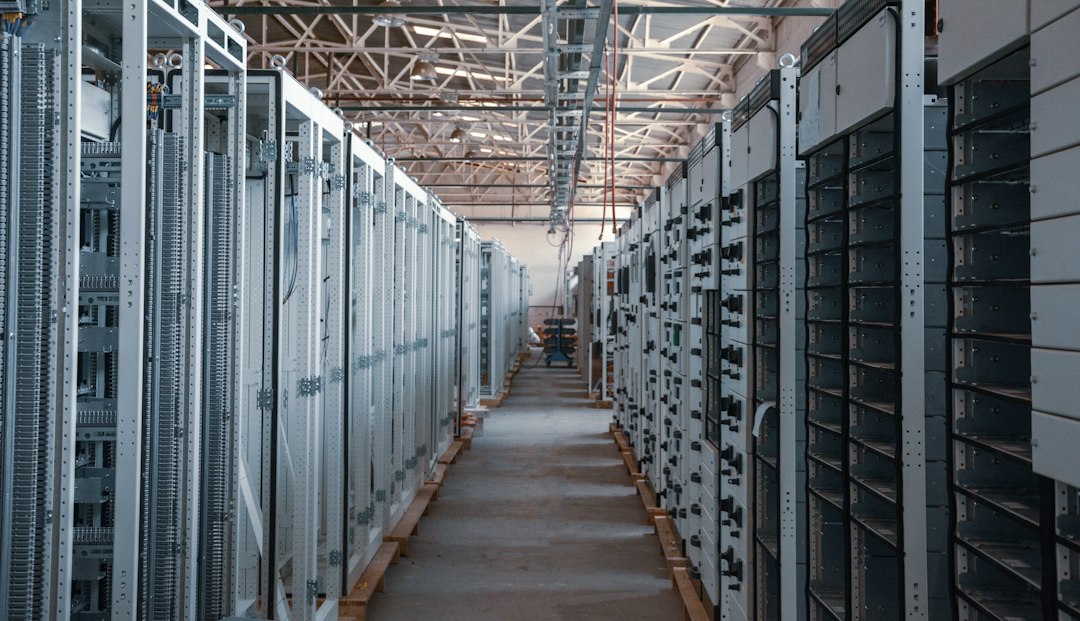
Photo by İsmail Enes Ayhan on Unsplash
Tiered Storage: Hot, Warm, and Cold Data Economics
Storage systems face a fundamental tension: fast storage is expensive, cheap storage is slow, and data access patterns are anything but uniform. Tiered storage resolves this by automatically moving data between storage classes based on how frequently it’s accessed, letting organizations pay for performance only where it matters.
The Access Pattern Reality
Most production datasets exhibit a steep access curve. A small fraction of data accounts for the majority of read and write operations, while the bulk sits largely untouched. Database tables might see 80% of queries hit 20% of rows. Object stores serving media assets often find that recent uploads dominate traffic while older content goes cold. Log aggregation systems know that analysts query the last few days constantly but rarely touch six-month-old entries.
The implication is clear: keeping everything on high-performance storage wastes money, but moving it all to cheap storage kills performance. Tiered storage splits the difference by matching storage class to access frequency.
Hot, Warm, Cold
The simplest model uses three tiers. Hot data lives on NVMe SSDs or in-memory caches, delivering sub-millisecond latency for active workloads. Warm data moves to SATA SSDs or high-capacity HDDs, accepting higher latency in exchange for lower per-gigabyte cost. Cold data lands on object storage or tape archives, where retrieval might take seconds or minutes but costs pennies per terabyte-month.
Cloud providers formalize this with explicit storage classes. Amazon S3 offers Standard, Infrequent Access, Glacier Instant Retrieval, Glacier Flexible Retrieval, and Deep Archive, each priced and optimized differently. Google Cloud Storage has Standard, Nearline, Coldline, and Archive. Azure Blob Storage follows a similar pattern.
The key difference across tiers is the trade-off between access cost and storage cost. Hot storage charges more per gigabyte stored but less per operation. Cold storage inverts this: cheap to store, expensive to retrieve. The crossover point depends on access frequency.
Automated Lifecycle Policies
Manual data movement doesn’t scale. Modern tiered storage relies on lifecycle policies that trigger transitions automatically based on age, access patterns, or metadata tags. An S3 lifecycle rule might move objects to Infrequent Access after 30 days without reads, then to Glacier after 90 days, and finally to Deep Archive after a year.
More sophisticated systems use access heat maps rather than simple age thresholds. They track read and write frequency at the block or object level, promoting data back to faster tiers when access picks up and demoting it when it cools. This prevents the common failure mode where a lifecycle policy archives something just before it’s needed again.
Some databases implement tiering internally. ClickHouse supports hot-warm-cold storage within a single table, automatically moving partitions between volumes as they age. Elasticsearch’s Index Lifecycle Management can shift indices through hot, warm, cold, and frozen phases, adjusting shard allocation and replication along the way.
Economics and Trade-offs
The cost savings from tiering are real but not automatic. Moving data incurs API charges, and retrieval from cold storage can be expensive if access patterns were misjudged. A poorly configured policy that archives data still under active use can cost more than leaving everything hot.
The decision hinges on the ratio of storage cost to access cost over time. If data is accessed frequently enough that retrieval fees exceed the savings from cheaper storage, tiering loses. If data truly goes cold and stays cold, the savings compound month after month.
Latency is the other price. Applications expecting single-digit millisecond queries will break if they suddenly hit Glacier retrievals measured in hours. Even warm storage with 10-20ms latency can degrade user experience in latency-sensitive paths. Effective tiering requires knowing which data can tolerate slower access and which cannot.
Implementation Patterns
The cleanest approach separates tiering from application logic. Storage systems handle movement transparently, and applications simply query or write without knowing which tier holds the data. This works well for object stores and some databases, but falls apart when cold retrieval latency exceeds application timeout budgets.
Explicit tiering gives applications control but adds complexity. The app decides what to archive and when, tracks tier state in metadata, and handles the case where a user requests something that requires thawing. This pattern is common in analytics platforms where users understand that querying old data might take longer.
Hybrid approaches use transparent tiering for most data but let applications hint or override. A CDN might let publishers mark certain assets as permanently hot, preventing automatic demotion even if access drops temporarily.
The Compounding Advantage
Tiered storage becomes more valuable as datasets grow. A 10TB database might not justify the operational complexity, but a 10PB data lake almost certainly does. The absolute dollar savings scale with size, and the percentage of cold data typically grows as datasets age, amplifying the effect.
For organizations managing years of logs, backups, or historical analytics, tiered storage isn’t optional—it’s the difference between a sustainable storage budget and runaway costs.