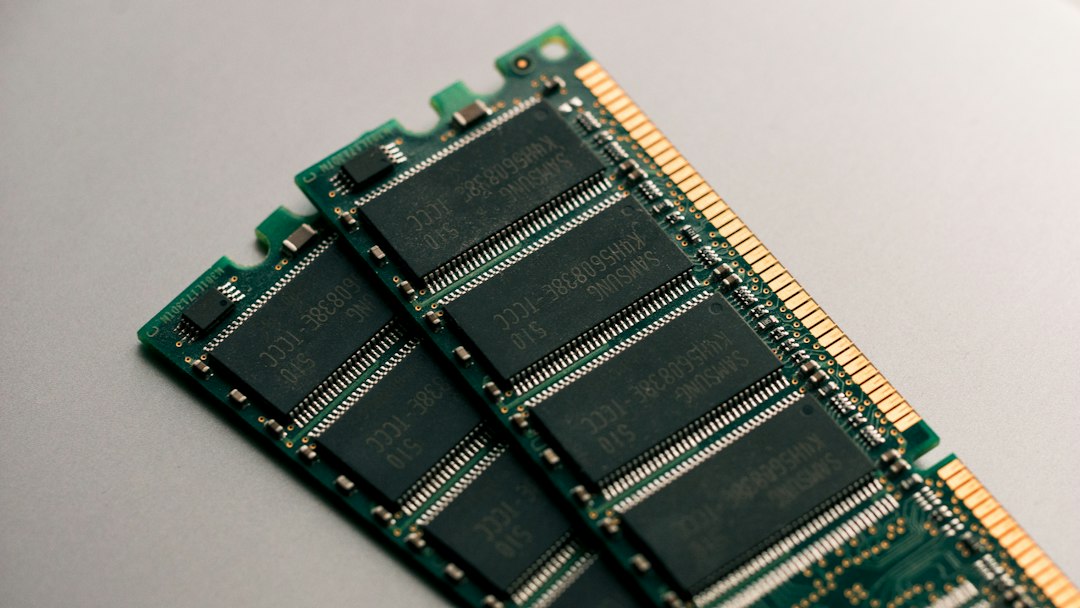
Photo by Harrison Broadbent on Unsplash
Transparent Data Compression: Runtime Compression in Memory-Constrained Systems
When physical memory runs short, systems face a choice: swap to disk and accept the latency penalty, or evict data and refetch it later. Transparent data compression offers a third path—compress pages or objects in memory, trading CPU cycles for additional effective capacity.
This technique appears in multiple layers of the stack, from kernel memory compression to database buffer pools, and its adoption reflects a fundamental shift in bottleneck economics: memory bandwidth and capacity have become expensive relative to compute.
Kernel-Level Memory Compression
Linux’s zswap and macOS’s memory compressor intercept pages before they’re swapped to disk. When memory pressure rises, the kernel compresses eviction candidates and stores them in a reserved RAM pool. A subsequent access decompresses on demand.
The compression ratio determines whether this trade makes sense. Text, logs, and structured data often compress 3:1 or better, making decompression cheaper than disk I/O by orders of magnitude. Binary data and encrypted content compress poorly, and the CPU overhead becomes wasted work.
Modern implementations use fast algorithms like LZ4 or Zstandard at low compression levels—prioritizing throughput over ratio. A page that takes 50 microseconds to decompress still beats a disk read that costs milliseconds, even on NVMe.
Database Buffer Pool Compression
Databases including MySQL InnoDB and PostgreSQL support transparent page compression in the buffer pool. A page read from disk is stored compressed in memory, decompressed only when a query accesses it.
This effectively increases buffer pool hit rates without allocating more RAM. A 16 GB buffer pool with 2:1 compression behaves like 32 GB for workloads with compressible data. The decompression cost appears as additional CPU time per query, but the alternative—going to disk—is far worse.
The challenge is deciding which pages to compress. Compressing every page wastes CPU on data that doesn’t shrink. Heuristics or sampling can identify high-value candidates, but they add complexity. Some systems compress everything and accept the overhead as simpler than selective logic.
Column Store Compression
Columnar databases achieve extraordinary compression ratios by storing similar values together. A column of timestamps or status codes compresses far better than row-oriented storage where each record mixes disparate types.
Delta encoding, run-length encoding, and dictionary compression exploit the redundancy within columns. Query engines decompress only the columns a query touches, and often operate directly on compressed data using SIMD instructions.
This is less about relieving memory pressure and more about reducing I/O and cache footprint. Compressed data fits more readily in CPU caches, improving scan performance even when memory is abundant.
Application-Level Object Compression
Some applications compress large objects in memory explicitly—caching compressed JSON or protocol buffers, decompressing on access. Redis supports compressed values, and application caches frequently serialize-then-compress to reduce heap footprint.
The cost model is tricky. Compression and decompression add latency to every access. If cache hit rates are high and objects large, the memory savings justify the CPU cost. If cache churn is high, you’re compressing objects you’ll evict before reading.
Why Now
Transparent compression has always been possible, but several trends make it more attractive:
Memory capacity per core hasn’t scaled as quickly as compute. Cloud instances often provide fewer GB per vCPU than older physical servers, making memory the constraint.
Fast compression algorithms like LZ4 and Zstandard deliver throughput exceeding memory bandwidth on modern CPUs, making decompression nearly free relative to a cache miss.
Workloads have grown data-intensive. Applications cache more, buffer more, and operate on larger working sets, all while cloud pricing makes memory expensive.
Tradeoffs
Transparent compression isn’t free. CPU usage rises, and worst-case latency increases when decompression happens on the critical path. Profiling may become harder when page faults or cache misses trigger decompression work that doesn’t appear as application code.
Compression works best when memory is the bottleneck and CPU headroom exists. If CPU is already saturated, compression shifts the problem rather than solving it. And for memory-safe languages with garbage collection, compressed heaps require allocator and GC integration—nontrivial engineering.
Transparent compression is another tool in the resource tradeoff toolbox, and its rising adoption reflects the reality that memory has become the scarce resource worth optimizing around.